
Taking gold from Singapore to India: customs allowance
, 7 min read
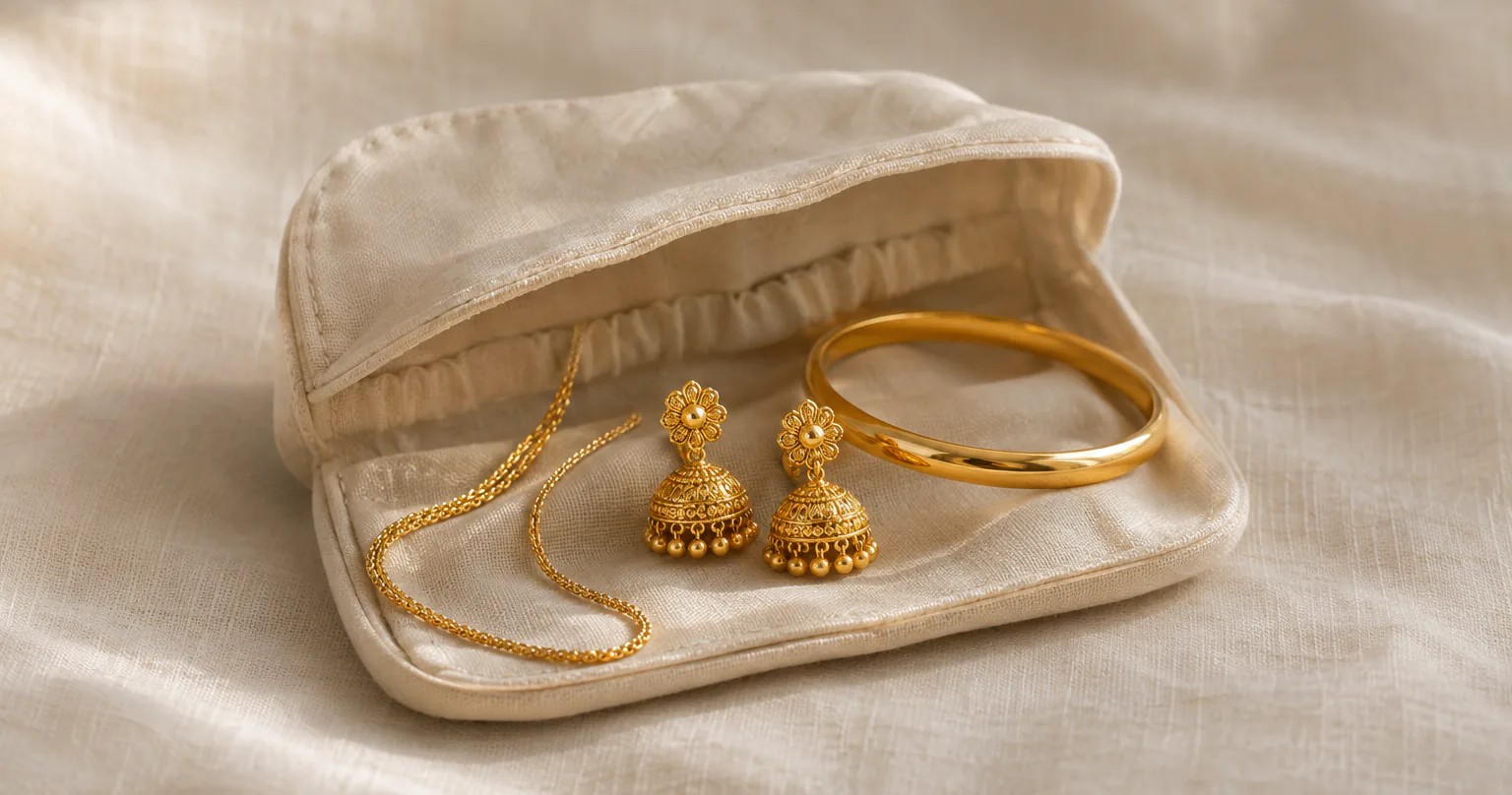
Many families in Singapore carry gold to India: a wedding set for a niece, a chain for a parent, a coin for a new baby. India rewrote its customs baggage rules on 2 February 2026, and older advice, including the rupee value caps on jewellery, no longer applies. Here is what the current rules say, how to declare gold when you land, and what Singapore asks of you when you leave.
The short answer: under India's Baggage Rules, 2026, in force since 2 February 2026, a woman who has lived abroad for more than one year can bring up to 40 g of gold jewellery into India duty-free, and any other passenger 20 g, with no value cap. This covers Indian residents and tourists of Indian origin, including NRIs and OCI cardholders. Gold bars and coins have no duty-free allowance.
Which rules apply, and from when
This guide follows the Baggage Rules, 2026 (Notification No. 14/2026-Customs (N.T.), dated 1 February 2026), which replaced the Baggage Rules, 2016 from 2 February 2026, and the CBIC Guide for International Travellers, updated as of February 2026. The new rules set the jewellery allowance by weight alone and removed the old value caps. CBIC notes that its guide has no legal force: only notifications published in the Gazette of India are binding.
Rules and duty rates change. Check the latest position on the CBIC website, cbic.gov.in, shortly before you fly, not only when you buy the gold.
How much gold jewellery can I carry from Singapore to India?
| Passenger | Duty-free gold jewellery |
|---|---|
| Woman (Indian resident or tourist of Indian origin) abroad for more than 1 year | Up to 40 g |
| Any other passenger in that group, abroad for more than 1 year | Up to 20 g |
| Abroad for 1 year or less | Special jewellery allowance does not apply |
| Tourist of foreign origin | Special jewellery allowance does not apply |
- Weight, not value. The limit is in grams, whatever the price of the piece.
- What counts as jewellery. The rules define it as articles of adornment ordinarily worn by a person, made of gold, silver, platinum or other precious metals, whether studded or not.
- Jewellery you wear every day. Used personal jewellery that you may reasonably need in daily life is also cleared duty-free, as part of your used personal effects. Other personal jewellery may be brought in on payment of duty.
- Personal use only. The jewellery must be bona fide baggage. Goods in commercial quantities are not cleared as baggage, even if you offer to pay duty.
CBIC counts NRIs and OCI cardholders as tourists of Indian origin. A "resident" is a person who ordinarily lives in India and holds a valid Indian passport.
Separately, residents and tourists of Indian origin arriving by air or sea have a general duty-free allowance of ₹75,000 for other goods (₹25,000 for tourists of foreign origin). It does not cover gold or silver in any form other than ornaments.
Gold bars and coins
Bars and coins get no duty-free allowance. The rules exclude "gold or silver in any form other than ornaments" from the general allowance, and CBIC says the weight-based jewellery allowance does not apply to gold bullion, which must be declared.
You can still bring them in on payment of duty. Under Customs Notification No. 45/2025-Customs, an eligible passenger, meaning one of Indian origin or holding a valid Indian passport who has stayed abroad for at least 6 months, may bring up to 1 kg of gold in any form, including jewellery. The duty must be paid in a convertible foreign currency.
How much duty is charged on gold above the allowance?
Jewellery above the allowance, and all bars and coins, attract customs duty. The rate depends on the passenger and the goods, and is set in customs notifications, including No. 45/2025-Customs for eligible passengers. For gold brought in under that notification, duty is worked out on a tariff value that CBIC sets in US dollars per 10 grams and revises regularly, not simply on the price on your receipt.
We do not quote a rate here, because that notification has been amended more than once in 2026. Check the current rate on the CBIC website, or ask at the Customs Help Desk in the arrival hall.
Red or Green Channel?
- Green Channel: for passengers not carrying dutiable or prohibited goods, for example jewellery within your allowance.
- Red Channel: for anyone carrying dutiable goods, including jewellery above the allowance and any gold bullion.
If you need the Red Channel, file the electronic declaration, Form CBD-I, on the ATITHI app or website up to 3 days before you land. You can update it until you arrive, and if you could not file it online, customs can let you declare on arrival. The form asks for the total weight of your personal jewellery and of all the jewellery you are carrying.
Walking through the Green Channel with dutiable gold, or declaring it wrongly, can lead to confiscation, fines and penalties, and in serious cases arrest and prosecution.
Taking wedding jewellery to India and bringing it back? CBIC says jewellery carried temporarily for an event may be allowed on a Temporary Baggage Import Certificate, which you get from customs on arrival.
What to carry
- An itemised receipt for each piece, showing the purity (such as 916 or 22K), the weight in grams, the date and the shop. The allowance is counted in grams, and a receipt shows customs what each piece is and what it weighs.
- For bars and coins, the invoice showing the refiner or coin name, the weight and the purity.
- Your passport, and something that shows how long you have lived abroad, since the allowance depends on it.
- The jewellery in your hand luggage, with the receipts, so you can show both if asked.
Whether you are buying 916 gold jewellery or 24K gold bars and coins to take to India, ask the jeweller to write the purity and weight of each item on the receipt. For what an itemised bill should show, see how to check a gold price quote.
Do you need to declare gold when leaving Singapore?
Not the gold itself. Singapore's cross-border cash reporting rules require a declaration only when you carry physical currency and bearer negotiable instruments, such as traveller's cheques, worth more than S$20,000 in total, or the equivalent in foreign currency. You file Form NP 727 online within 72 hours before departure.
Gold jewellery and bars are goods, not cash. The Ministry of Home Affairs told Parliament in May 2023 that this reporting requirement "does not extend to goods". The law counts coins as cash only when they are legal tender and also circulate as everyday money in the country that issued them.
If you carry more than S$20,000 in cash alongside your gold, declare the cash. Visitors claiming a GST refund under the tourist refund scheme may have their purchases inspected by Singapore Customs at the airport; see GST on gold in Singapore.
Questions people ask about taking gold to India
How much gold can I carry from Singapore to India?
If you are an Indian resident or a tourist of Indian origin who has lived abroad for more than a year, up to 40 g of jewellery duty-free for a woman and 20 g for anyone else. You can bring more on paying duty.
Is there still a value limit on duty-free gold jewellery?
No. The Baggage Rules, 2026 removed the rupee caps. The allowance is now by weight only.
Can I bring gold coins or bars duty-free?
No. Gold in any form other than ornaments has no duty-free allowance and must be declared. Eligible passengers can bring up to 1 kg on paying duty in foreign currency.
Do OCI cardholders get the jewellery allowance?
Yes, if they have lived abroad for more than one year. CBIC counts NRIs and OCI cardholders as tourists of Indian origin.
I have lived in Singapore for less than a year. What applies?
The special jewellery allowance does not apply, though used jewellery for daily wear is still duty-free. Other jewellery attracts duty and must be declared.
Do I need to declare gold when leaving Singapore?
No. Singapore's declaration covers cash and bearer negotiable instruments above S$20,000, not goods such as gold jewellery or bars.
Visit us
Minora Jewels sells 916 gold jewellery and 24K gold bars and coins at 142 Dunlop Street, inside Haniffa, in Little India, a few minutes from Little India (NE7, DT12) and Rochor (DT13) MRT stations. If you are buying gold to take to India, ask for the purity and weight of each piece on your receipt. We are open every day from 10.30am to 9.30pm, and you can walk in without an appointment. Plan your visit.
This article is general information, not legal or tax advice. Customs rules and duty rates change; check the current position with CBIC before you travel.